
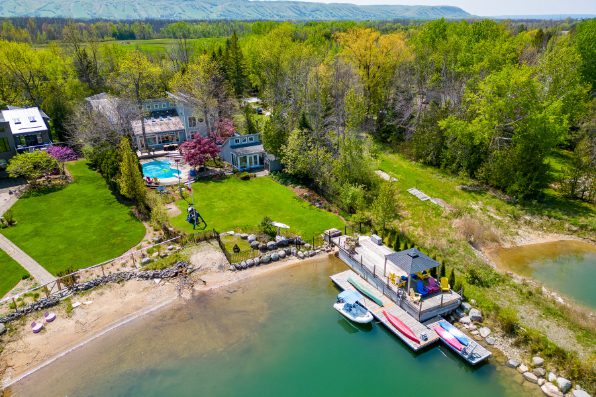
There’s nothing quite like morning coffee with Georgian Bay in front of you. Nobody needs to explain the appeal of waterfront living around Collingwood. What surprises many buyers is how much can sit behind that view: who actually owns the shoreline, which agencies govern the work you want to do, how the water level changes from year to year, and whether a dock, a breakwall or a septic system is in the shape the listing suggests.
The good news is that every one of those questions has an answer. You just want those answers before your offer goes firm, not after. This guide walks you through what to check, in roughly the order it matters, so you can write a confident offer on the right property.
Throughout, “near Collingwood” means the six municipalities of Southern Georgian Bay. Collingwood, Clearview Township and Wasaga Beach are in Simcoe County. The Blue Mountains, Grey Highlands and Meaford are in Grey County. Thornbury, Craigleith and Lora Bay are communities within The Blue Mountains, not separate towns, and that distinction matters because each municipality has its own building department and rules.
First, be clear about what kind of waterfront you’re buying
“Waterfront” in a listing headline can mean several different things. Sorting these out early saves a lot of heartache.
Direct frontage means the lot, or the condominium’s common property, actually meets the shore. Even then, the legal boundary needs confirming, which we cover below.
Water view means you can see the bay. A view doesn’t give you the right to cross a neighbour’s land, use a beach or install a dock.
Water access can come through a public park, a launch ramp, condominium common elements, a club membership or a registered easement. Each one gives you very different rights.
Deeded or registered access is a legal right recorded on title. Your lawyer should read the actual instrument, because a right-of-way to the water is not the same as owning frontage or having permission for a dock.
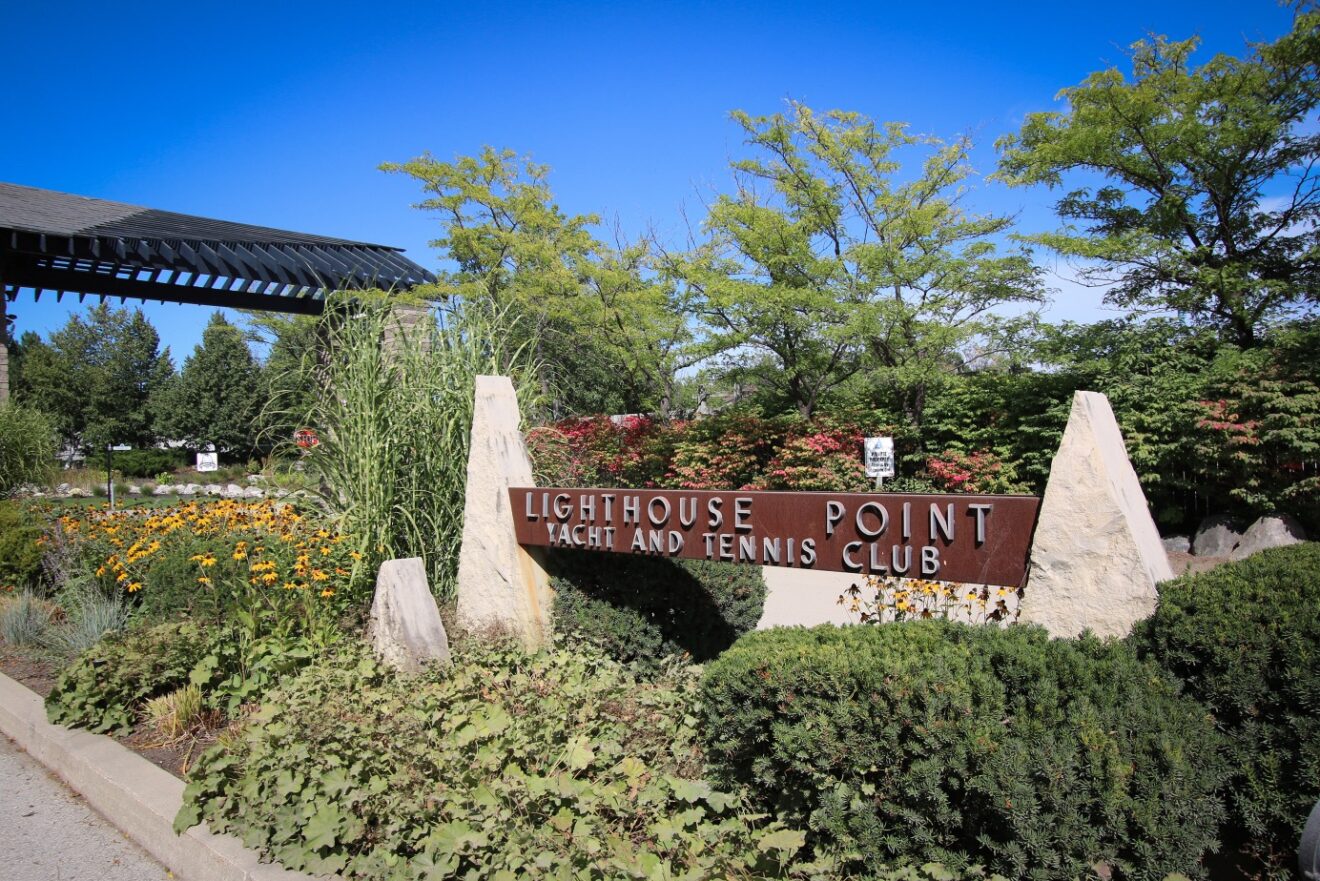
Around Collingwood you’ll find all four. Lighthouse Point offers condominium and townhome living on the bay with trails, pools and a deep-water marina, but a community marina doesn’t mean every unit comes with a slip. [5] Wyldewood Cove in west Collingwood connects its buildings to the water by a private trail with a small beach and paddle-craft storage, though it has no working boat ramp. [6] Cranberry is a group of sub-communities rather than one waterfront development. The Cranberry Yacht Club area, between White’s Bay and Collingwood Harbour, includes waterfront townhomes, while other parts of Cranberry are inland or offer partial views. [7] Princeton Shores, meanwhile, is where you’ll find detached homes with private Georgian Bay frontage.
West of town, The Blue Mountains mixes bay-front homes along Highway 26, Craigleith shoreline and the Lora Bay community. Further along are Thornbury and Meaford’s harbour towns. To the east, Wasaga Beach gives you a choice between sandy bay beachfront and Nottawasaga River frontage, and those two are very different purchases. Inland, Lake Eugenia and the Beaver River in Grey Highlands offer a quieter lake-and-river alternative. [11]
Know the shoreline in front of the house
Southern Georgian Bay shorelines are not all alike, and the shore type shapes how you’ll actually use the water.
Much of Collingwood’s nearshore is shallow, with limestone bedrock shoals and a mix of cobble, boulder and finer sediment. The deep-water channel runs along the harbour breakwall, but that doesn’t mean there’s deep water off a residential lot elsewhere in town. [8] If boating matters to you, check the route from the shoreline to navigable water, not just whether there’s an old dock.
In The Blue Mountains, the shore often shows flat, fractured shale; Craigleith Provincial Park is the classic example, with fossil-bearing rock that’s great for launching a kayak or paddleboard. [9] It isn’t uniform, though. Northwinds, for instance, is a sandy beach. [10]
Wasaga Beach is the sandy one: a wide, flat, shallow sand bottom and a dune system shaped by constant beach processes. That sand moves. Beach width and the river mouth can change, so a listing photo isn’t a promise of what the shore will look like next summer. [8]
A few practical questions to ask on any showing: Can you swim off this shore, or is it rock shelf? Is the water deep enough for the boat you own, at both higher and lower lake levels? Is the shoreline protected, and if so, by what and in what condition?
Understand Georgian Bay water levels before you fall for the beach
Georgian Bay sits at the same level as Lakes Michigan and Huron, and that level moves noticeably over the years. In October 2026, the lake averaged 176.43 metres (IGLD 1985), just 3 cm below the long-term October average and 17 cm higher than October 2025. These figures are provisional, lake-wide monthly averages, not a reading at any one shoreline. [26]
The historical swings are what you should keep in mind. July 2020 reached 177.46 m, part of the highest annual average on record. The all-time monthly high was 177.50 m in October 1986, and the all-time monthly low was 175.57 m in January 2013. [27] That’s close to two metres between the record high and record low.
You can see the difference on the ground. During the 2019–2020 high-water period, Wasaga Beach dunes eroded, sections of Collingwood’s waterfront trail flooded, and some private owners around the area lost shoreline and gardens. [28]
So when you view a property, picture it at both ends of that range. A generous beach at today’s level could shrink considerably in a high-water year. A dock that works today could sit in shallow water during a low-water year. Wind and waves can also push water well above the calm-lake level during storms.
Find out who owns the shoreline
This is the question buyers most often assume they already know the answer to.
Many Ontario waterfront properties are fronted by an original shore road allowance, typically 66 feet wide, which was laid out when the land was first granted. Inside a municipality, that strip is generally under the municipality’s control unless it has been legally closed and sold. Some properties instead face a Crown shoreline reserve, which stays under provincial jurisdiction. Mowing, landscaping or building on that strip for decades doesn’t transfer ownership to you, and the Province warns that structures built on land the owner doesn’t own can cause problems with sales, mortgages and insurance. [16] Not every property has one of these strips, which is exactly why you check.
The lakebed is another layer. Ontario’s starting point is that the bed of a navigable waterbody did not pass with the upland grant unless it was expressly granted, and a water lot has to be traced on title separately. [17] A dock in the water is not evidence that you own the bed beneath it.
At Wasaga Beach, there’s an extra wrinkle. In January 2026, the Province confirmed legislative changes removing Beach Areas 1 and 2, New Wasaga and Allenwood Beach from the provincial park, and said it would advance the transfer of those Crown lands to the Town. The Town has committed to keeping the beach public. [18] For a buyer, the takeaway is simple: a “beachfront” home doesn’t come with ownership of the sand to the water, and your lawyer should confirm exactly where the lot ends.
What to do: ask for the existing survey, and have your lawyer and an Ontario land surveyor confirm the waterfront boundary from the legal description, plans and shoreline history. If a shore road allowance was closed and purchased, confirm the closing by-law and transfer are registered on title, not just applied for.
Confirm which conservation authority and municipality govern the property
Southern Georgian Bay has six building departments and three conservation authorities, and waterfront properties usually involve both levels.
Under Ontario Regulation 41/24, in force since April 1, 2024, development in regulated areas needs a conservation authority permit. That covers building, additions, grading, filling and moving material. Along the Great Lakes, the regulated area is based on the 100-year flood level plus wave uprush, the erosion hazard and the dynamic beach hazard, plus an extra 15-metre allowance. It isn’t a single setback measured from today’s waterline. [19]
Which authority applies depends on the parcel, not just the town name. The Nottawasaga Valley Conservation Authority (NVCA) covers Collingwood, Clearview and Wasaga Beach, and also parts of The Blue Mountains and Grey Highlands. [20] Grey Sauble Conservation Authority (GSCA) covers The Blue Mountains, Meaford and Grey Highlands within its watershed. [21] Saugeen Valley Conservation Authority (SVCA) serves part of Grey Highlands. [54] The Province has also proposed merging these authorities into a larger regional authority, targeted for early 2027. It’s a proposal, not a done deal, but it’s worth watching. [53]
Each authority offers a property inquiry service that’s well worth the fee before you go firm. In 2026, NVCA charges $220 for a legal or real estate inquiry. [23] GSCA charges $235 per parcel for a desktop letter covering whether its regulations apply, general requirements and any past or outstanding compliance issues. [21] SVCA’s standard property clearance is $230. [22] These letters aren’t approvals for future work, but they tell you a great deal about what you’re buying.
Municipal zoning adds its own shoreline rules. In Collingwood, properties on Nottawasaga Bay generally need main buildings at least 15 metres from the 178.0 m elevation (Canadian Geodetic Datum), with building openings at least 178.3 m. [24] In The Blue Mountains, buildings and many structures, including decks, pools and septic systems, must be at least 15 metres from the 177.9 m elevation next to Georgian Bay. [25] Notice that these are elevations on the land, not distances from where the water happens to be today. A surveyor can show you where they fall on your lot.
If you’re planning a rebuild, addition or new shoreline protection, ask the municipality and the conservation authority about the realistic building envelope before you firm up your offer. That’s especially true where an existing cottage sits close to the water.
Docks, boathouses and shoreline work: more than one approval
If a dock or boathouse is part of the dream, it helps to know there are several separate rule sets.
The conservation authority regulation exempts a seasonal or floating dock of 10 square metres or less, as long as it has no permanent supports and can be removed during flooding. [19] The Province requires a work permit on shore lands for structures that physically touch more than 15 square metres of the lakebed. New breakwalls and erosion-control structures, and changes to the size of existing ones, also need a provincial permit. [29] Fisheries and Oceans Canada has a code of practice for residential docks, boathouses and moorings that excludes new crib docks, and work under the code requires notifying DFO 10 working days ahead. [30] Transport Canada’s Minor Works Order sets location and size limits for docks and boathouses on navigable waters. [31]
You don’t need to memorize all of this. What it means for your offer is that you should ask the seller what permits exist for the current dock, boathouse and shoreline protection, and have your lawyer check. Don’t assume you can enlarge a dock or add a two-storey boathouse later.
Boat slips are another reality check. Collingwood allocates seasonal slips through a waitlist. [13] At Thornbury Harbour, every slip category is full with a waitlist. [14] Meaford Harbour’s 194 slips are also taken. [15] Buying near a harbour doesn’t come with a berth, so if you need one, plan for it early.
Wells, septic and water quality
Many waterfront homes near Collingwood are on municipal services, but rural and cottage properties often rely on a private well and septic system. Both deserve their own inspections.
For septic, Ontario’s Building Code generally keeps leaching beds at least 15 metres from a lake, and treatment units 15 metres from a well and from the water. Tanks in flood-prone areas must be anchored. [32] On a tight waterfront lot, that can limit where a replacement system can go, and how big it can be if you plan to add bedrooms. Ask for permit records, pump-out history and a proper inspection by a septic professional. If the property is in Clearview within 100 metres of a municipal well, it falls under the Township’s mandatory five-year reinspection program. [34]
For wells, Public Health Ontario tests private well water for E. coli and total coliforms free of charge. It doesn’t test for chemicals, so a clean result isn’t the full picture. Samples need to reach the lab within 48 hours of collection. [33] A single test also doesn’t tell you whether the well keeps up with a full house in August, so ask about flow and history too.
If you plan to swim, know that public beaches are tested in season, but private waterfronts aren’t sampled by the Simcoe Muskoka health unit. [50] Collingwood Harbour has a good story here: it was the first Canadian Great Lakes Area of Concern to be delisted, back in 1994, after major cleanup work. [52] That’s a long-term improvement, not a guarantee about any individual shoreline on a given day.
Inspections that go beyond the house
A standard home inspection is essential, but it may not cover the things that make a waterfront property expensive to fix. Under typical association standards, inspectors aren’t required to assess seawalls, breakwalls, docks, erosion control, wells or septic systems. [39] Read the inspection agreement and add specialists where needed:
- A home inspector for the house itself, with extra attention to foundations, crawlspaces, moisture and drainage.
- A septic professional and well-water testing for privately serviced properties.
- A marine contractor or dock specialist to look at docks, lifts and ice damage.
- A coastal engineer if the breakwall looks distressed, erosion is close to buildings, or you’re planning shoreline work.
Ask the seller about past flooding, ice damage, moisture repairs and insurance claims. The Seller Property Information Statement can be a helpful starting point. It’s the seller’s own information, not a warranty, and you still need your own checks. [38]
Get insurance answers before you waive conditions
Insurance is one of the most important waterfront checks, and it’s easy to leave until the last minute. In Canada, sewer backup and overland flood are separate optional coverages. Overland flood coverage can come with limits and may be unavailable in high-risk locations. Coastal flooding and storm surge generally aren’t covered by home policies. [40]
Before your financing and insurance conditions come off, get an address-specific quote. Ask the insurer in writing how the policy handles lake flooding, wave damage, erosion and seepage. Also ask whether docks, lifts, breakwalls and outbuildings are covered, and what applies if the home sits empty in winter or is rented out.
Financing, taxes and carrying costs
If this will be a second home, your financing options depend on the property itself, not just on you. CMHC’s second-home program requires a property that’s suitable for year-round living with year-round access, and allows as little as 5% down on the first $500,000 and 10% on the portion above, for properties under $1.5 million. Properties of $1.5 million or more need 20% down. [41] Seasonal cottages can qualify under Sagen’s Type B vacation-home rules with a maximum 90% loan-to-value. Investment or rental-pool properties don’t qualify under that program. [42] Many waterfront homes here are priced above $1.5 million, so plan your down payment early.
A few tax points to keep in mind. Ontario’s land transfer tax applies to the purchase, with a 2.5% rate on the portion above $2 million for homes with one or two single-family residences. [44] Foreign buyers pay Ontario’s 25% Non-Resident Speculation Tax on top of that. [43] The federal Underused Housing Tax was eliminated for 2025 and later years, though earlier years’ obligations remain. [45]
For property tax, MPAC’s 2026 assessments still use January 1, 2016 values, and waterfront features such as frontage, shoreline type and exposure are part of how a waterfront home is valued. [49] Renovations and additions can change the assessment, so ask your lawyer or MPAC about any recent work.
Planning to rent it out? Check before you count the income
Short-term rental rules differ across the six municipalities, and they matter for waterfront buyers who are budgeting on rental income. In Collingwood, short-term rental licences are tied to the operator’s principal residence, so a stand-alone investment home doesn’t automatically qualify. [46] In The Blue Mountains, short-term accommodation is only permitted in specific zones, and there’s a moratorium on new Type B licences outside the exception zone. [47] Wasaga Beach adopted a new licensing by-law in February 2026, but it didn’t change where rentals are permitted by zoning. [48] Confirm the specific property’s zoning and licence status before you rely on any rental projection.
What the market data can and can’t tell you
Market reports are useful background, but none of the current local ones isolate waterfront. Royal LePage Locations North’s October 2026 Collingwood report shows 40 residential sales, an average price of $858,973 and a median of $652,500. Year to date, homes averaged 53.5 days on market. The brokerage describes it as a buyer’s market. [1] In The Blue Mountains, October’s 21 sales averaged $1,141,143 with a median of $915,000. [2] Both reports combine freehold and condominium sales of every kind. They also flag possible discrepancies after a recent board and reporting-system transition. Official OnePoint statistics from December 2024 onward are still on hold. [3]
Royal LePage’s 2026 recreational property report puts the 2025 single-family median for the Southern Georgian Bay area (Meaford, Thornbury, Wasaga Beach and Collingwood) at $876,000, but it publishes no local waterfront figure. [4]
A softer overall market can give you more time and room to negotiate. But true waterfront is scarce, and a well-located property can still attract strong interest. A municipal average won’t help you price a specific waterfront home. Recent sales of genuinely comparable waterfront properties will. Look at similar frontage, shoreline type, servicing and condition.
Writing the offer: conditions that protect you
Ontario’s standard Agreement of Purchase and Sale doesn’t automatically include a home inspection condition. It also limits the seller’s survey obligation to what the seller already has. [35] For waterfront, tailored conditions with realistic deadlines are your best protection. Consider:
- Financing, approved for this specific property and how you intend to use it.
- Home inspection, plus septic, well and shoreline specialists where relevant.
- Insurance, with a written quote that explains water coverage.
- Lawyer’s review of title, survey, access, shoreline ownership and permits.
- Survey and title, confirming the boundary, any shore road allowance and registered access rights.
- Water and septic, covering potability, supply and the septic system’s condition and records.
The Real Estate Council of Ontario points out that pre-qualification doesn’t remove the need for a financing condition, and that skipping an inspection is a significant risk. [36] If there are competing offers, you’ll be told how many written offers the seller’s brokerage received. The details of other offers are shared only if the seller directs it in writing. [37]
Leave enough time in your conditions for conservation authority and municipal inquiries. Their timelines vary. Title insurance is valuable, but it isn’t a substitute for a survey or permit checks; some issues, including those a new survey or inspection would have revealed, may be excluded. [51]
How this plays out for different buyers
First-time waterfront buyers. If you’re buying your first home on the water, a waterfront condo or townhome can be a gentler start. Shared shoreline maintenance is handled through condo fees. Read the status certificate carefully for reserve fund health, shoreline or marina repairs, and what amenity and slip rights actually come with your unit. Rental rules matter here too.
Growing families. Swimmable shoreline usually matters more than a dramatic view. Look at sandy or gently sloping shores, safe water entry and nearby public beaches, and remember that public beaches in The Blue Mountains aren’t lifeguard-patrolled. [10] On private wells, make water testing a firm condition, and check that the septic system is sized for your household.
Four-season escapes and second properties. Confirm year-round road access, winterization and potable water early, because they affect both financing and insurance. [41] Ask how the home is protected when empty, and plan for seasonal dock removal. If you hope to rent occasionally, check the municipality’s rules first.
Luxury buyers. At the top of the market, the value is often in the frontage, the building envelope and future plans. Before you go firm, get the survey, the conservation authority inquiry letter, the municipal zoning setbacks and, where shoreline work is planned, a coastal engineer’s opinion. Budget for the 2.5% land transfer tax bracket above $2 million, and expect a 20% minimum down payment above $1.5 million. [41]
Downsizers. A low-maintenance waterfront condo near Collingwood’s harbour and trails can be a great fit, though not every unit has the same view, frontage or marina rights. If you’re considering a smaller detached waterfront home, factor in the upkeep of the shoreline, dock and private systems, and whether you want to keep managing them over time.
Your pre-offer waterfront checklist
- Confirm the type of waterfront: frontage, view, access or registered right.
- Get the survey and confirm the boundary, any shore road allowance and lakebed ownership.
- Identify the municipality and conservation authority, and order an inquiry letter.
- Check zoning setbacks and permit history for the house, dock, boathouse and shoreline protection.
- Picture the property at high and low water levels.
- Book specialist inspections for septic, well, dock and shoreline as needed.
- Get a written insurance quote that explains water coverage.
- Confirm financing for this property type and your intended use.
- Check short-term rental rules before counting on rental income.
- Price the home using genuinely comparable waterfront sales.
Frequently asked questions
Do I own the beach in front of a waterfront home? Not necessarily. Some lots front onto a shore road allowance or Crown shoreline reserve, and lakebeds usually remain Crown land unless they were expressly granted. Your lawyer and surveyor can confirm what you actually own. [16]
Do I need a permit to replace a dock? It depends on the dock’s size, how it’s supported and where the property is. Conservation authority, provincial, federal fisheries and navigation rules can each apply. A small seasonal or floating dock may be exempt from some of them. [19] [30]
Is a conservation authority inquiry worth it before I buy? Yes, for almost any waterfront property. For a few hundred dollars, you learn whether the property is regulated and whether there are known compliance issues. [21] [23]
Will my home insurance cover flooding from Georgian Bay? Not automatically. Overland flood is an optional coverage, and storm surge generally isn’t covered. Get a written, address-specific answer before you firm up your offer. [40]
Are Georgian Bay water levels high right now? In October 2026, they were close to the long-term average for that month. Levels change over time, so judge the property across the full historical range. [26]
Ready to look at waterfront?
Waterfront homes near Collingwood are some of the most rewarding properties in Southern Georgian Bay, and some of the most detailed to buy. The right preparation lets you move quickly when the right shoreline comes along, without skipping the checks that protect you.
We’d be glad to help you compare waterfront listings and recent comparable sales. We can also help you put together the questions and documents for your lawyer, inspector and insurer before you write an offer.
This article is general information, not legal, engineering, insurance, tax or financial advice. Rules, fees and figures were reviewed on November 24, 2026 and can change. Confirm the details for any specific property with the appropriate professionals and authorities.
Sources
- Collingwood Real Estate Market Report, October 2026 — Royal LePage Locations North
- The Blue Mountains Real Estate Market Report, October 2026 — Royal LePage Locations North
- OnePoint Association of REALTORS Market Statistics — CREA
- 2026 Spring Recreational Property Report Price Chart — Royal LePage
- Living in Lighthouse Point, Collingwood — Keleher + Co.
- Wyldewood Cove Waterfront Condos, Collingwood — Andrea Mendes
- Cranberry Condos and Sub-Communities, Collingwood — Andrea Mendes
- Bathymetry and Biodiversity in Lower Nottawasaga Bay — WILD Canada for NVCA
- Craigleith Provincial Park — Ontario Parks
- Beaches — Town of The Blue Mountains
- Boat Launches — Town of Wasaga Beach
- Lakes — Municipality of Grey Highlands
- Marina and Harbour — Town of Collingwood
- Thornbury Harbour Mooring and Slips — Town of The Blue Mountains
- Meaford Harbour — Municipality of Meaford
- Road Allowances and Crown Shoreline Reserves Disposition Policy — Government of Ontario
- Ownership Determination, Beds of Navigable Waters Act Policy — Government of Ontario
- Wasaga Beach Provincial Park Amendments Decision — Environmental Registry of Ontario
- O. Reg. 41/24, Prohibited Activities, Exemptions and Permits — Ontario e-Laws
- Municipal Members and Watershed Partners — Nottawasaga Valley Conservation Authority
- 2026 Property and Regulation Inquiry Letter — Grey Sauble Conservation Authority
- 2026 Environmental Planning and Regulations Fee Schedule — Saugeen Valley Conservation Authority
- Permit and Planning Fees — Nottawasaga Valley Conservation Authority
- Zoning By-law 2010-040, April 2026 Consolidation — Town of Collingwood
- Comprehensive Zoning By-law 2018-65 — Town of The Blue Mountains
- Monthly Bulletin of Great Lakes Water Levels, November 2026 — US Army Corps of Engineers
- Historical Monthly Mean Water Levels, Lake Michigan-Huron — Fisheries and Oceans Canada
- High Water — On The Bay Magazine
- Crown Land and Shore Land Work Permits — Government of Ontario
- Code of Practice for Boathouses, Docks and Moorings — Fisheries and Oceans Canada
- Works on Navigable Waters — Transport Canada
- 2024 Building Code Compendium, Part 8 Sewage Systems — Government of Ontario
- Private Drinking Water Testing — Public Health Ontario
- Septic Reinspection Program Information Guide 2026 — Clearview Township
- Agreement of Purchase and Sale, Form 100 — Ontario Real Estate Association
- Competing Offers — Real Estate Council of Ontario
- Bulletin 4.1, Number and Content of Competing Offers — Real Estate Council of Ontario
- Property Information Statements — Real Estate Council of Ontario
- Residential Standards of Practice — CanNACHI
- Flood Insurance Guidance — Insurance Bureau of Canada
- Second Home Fact Sheet — CMHC
- Vacation and Secondary Homes — Sagen
- Non-Resident Speculation Tax — Ontario Ministry of Finance
- Calculating Land Transfer Tax — Ontario Ministry of Finance
- Underused Housing Tax Changes — Canada Revenue Agency
- Short-Term Accommodations — Town of Collingwood
- Short Term Accommodation Licensing — Town of The Blue Mountains
- Short-Term Accommodations — Town of Wasaga Beach
- Waterfront Home Property Assessments — MPAC
- Beach Water Testing — Simcoe Muskoka District Health Unit
- Understanding Title Insurance — FSRA
- Collingwood Harbour Area of Concern Delisted — Canada Water Agency
- Proposed Conservation Authority Consolidation — Grey Sauble Conservation Authority
- Board of Directors and Municipal Partners — Saugeen Valley Conservation Authority