
September 2026 market data | Updated October 19, 2026 | Collingwood, Ontario
If you are looking at Collingwood real estate, September’s numbers point to a market where buyers should look beyond the headline price. The average sale price increased compared with a year earlier, but the median sale price declined. Sales also slowed, and new listings substantially outnumbered completed transactions. Royal LePage Locations North’s September 2026 report describes these conditions as a buyer’s market. [1]
That combination can create opportunities, but it does not make every home a bargain. Your negotiating position still depends on the property, its asking price, competing listings and recent comparable sales.
This Collingwood real estate market update explains the latest reported prices, what the listing numbers do—and do not—say about inventory, and how to approach buying a home with a clearer plan.
Collingwood real estate market at a glance
The September 2026 Collingwood market report from Royal LePage Locations North records the following results. Percentage changes below compare September 2026 with September 2025. [1]
- Average sale price: $847,333, up 5.61% year over year.
- Median sale price: $605,000, down 11.03% year over year.
- Properties sold: 38, down 30.91% from 55 a year earlier.
- New listings: 163, down 11.89% from 185 a year earlier.
- Sales-to-new-listings ratio: 23.31%, which the report identifies as buyer’s market conditions.
These are Collingwood figures, not an average for all of Southern Georgian Bay. They should not be applied automatically to The Blue Mountains, Wasaga Beach, Clearview or another nearby municipality.
A useful caution: the report notes that its transition to a new board and reporting system may produce occasional data discrepancies. Treat the figures as a market snapshot, not a property valuation. It also does not publish an active-listing total or months-of-inventory figure, so the 163 new listings should not be mistaken for the number of homes available at month-end. [1]
Collingwood home prices: why the average rose while the median fell
The most important pricing story this month is the difference between the average and the median.
The average sale price adds together the prices of the properties sold and divides that total by the number of sales. Higher-priced transactions can pull this figure upward, especially when the monthly sales count is relatively small.
The median sale price is the midpoint of the sale prices: half are above it and half are below it. It is less sensitive to a few unusually expensive transactions, although it can still move when the types of homes selling change.
In September, Collingwood’s average sale price was $847,333, while its median was $605,000. With only 38 reported sales, the mix of properties changing hands matters when interpreting those results. [1]
An increase in the average does not establish that every Collingwood home gained 5.61% in value. Likewise, the median’s decline does not mean that every property lost 11.03%. Neither number tells you exactly what a particular detached home, condominium or townhome should sell for.
For buyers, the better question is: What have similar homes in this location actually sold for? Compare properties with a similar ownership type, size, condition, parking arrangement and setting. A renovated freehold home and a condominium with substantial monthly fees can have very different costs and buyer appeal, even when their asking prices are close.
What the year-to-date numbers add
A single month is useful, but the January-to-September figures provide a wider view. The report lists a year-to-date average sale price of $786,312, up 2.5%, and a year-to-date median of $660,000, down 3.3%. It reports 385 sales over that period, down 6.1% from 410 during the same period in 2025. [1]
The year-to-date results also show an average rising while the median falls. That reinforces the need to assess the home you are considering rather than rely on one broad market number.
Collingwood inventory: understand new listings versus homes available
When buyers ask about Collingwood housing inventory, they usually want to know how many suitable homes they can choose from right now. A monthly new-listing count answers a different question.
New listings measure properties entering the market during a reporting period. Active listings measure the properties still available at a particular point in time. Some newly listed homes sell, expire or leave the market, while older listings may remain available.
Collingwood recorded 163 new listings and 38 sales in September 2026. New listings were lower than a year earlier, but sales fell more sharply. The report’s 23.31% sales-to-new-listings ratio reflects that relationship; it is not a statement that exactly 23.31% of September’s newly listed homes sold that month. Sales can include properties listed earlier. [1]
That distinction matters. Fewer new listings do not automatically mean a tighter market when buying activity is also slowing.
What about active inventory and months of supply?
The cited September report does not provide a verified Collingwood active-listing total or months-of-supply figure. Those numbers should not be estimated from new listings alone. [1]
Months of supply relates available inventory to the pace of sales. To understand your own buying options, request a current MLS search for your price range and property type, along with a dated active-inventory breakdown. A town-wide total can still hide limited choice in a particular condominium building or neighbourhood.
The most useful inventory question is not simply, “How many homes are for sale in Collingwood?” It is, “How many homes meet my requirements, and how does the one I like compare with them?”
Is Collingwood a buyer’s market?
Royal LePage Locations North classifies September 2026 as a buyer’s market, based on its reported sales and listing activity. Its year-to-date sales-to-new-listings ratio was 32.19%, compared with the monthly ratio of 23.31%. [1]
For buyers, that supports a more deliberate approach to comparing properties and preparing offers. It does not guarantee a discount, a lengthy negotiation or the absence of competing buyers.
A property with an appropriate asking price and features that are difficult to find may still attract attention. A home with several comparable alternatives, unresolved maintenance issues or an asking price above recent sales may require a different offer strategy.
Time on market also deserves context. The report’s year-to-date average days on market was 54.11, compared with 57.78 a year earlier. That is a January-to-September average—not the average for September alone. [1]
Rather than assume every seller is under pressure, review the individual listing’s history. Ask about previous price changes, any relisting and the seller’s preferred closing date. Those details can be more useful than a general market label.
What buyers should know before making an offer
Start with a comfortable ownership budget
Mortgage pre-approval is a helpful starting point, but your maximum approved loan should not automatically become your shopping budget.
Consider the full cost of ownership, including property taxes, insurance, utilities and maintenance. For a condominium, add monthly fees and understand what they cover. Leave room for closing expenses and unexpected repairs rather than committing every available dollar to the purchase price.
Ask your lender or mortgage professional to confirm your current borrowing options and the financing requirements for the property you intend to buy. An older rate quote or a general online payment estimate may not reflect your situation at the time of an offer.
Compare sold homes, not only asking prices
Active listings show what sellers hope to receive. Completed sales show what buyers have agreed to pay.
Before making an offer on a Collingwood home, review recent comparable sales alongside competing listings. Consider differences in renovations, lot size, layout and ownership costs. A lower asking price is not necessarily better value if the home needs significant work or carries expenses that another property does not.
Also check whether the available sold evidence is genuinely comparable. A broad municipal average should not replace an assessment of the specific home and its immediate alternatives.
Match the property to how you will use it
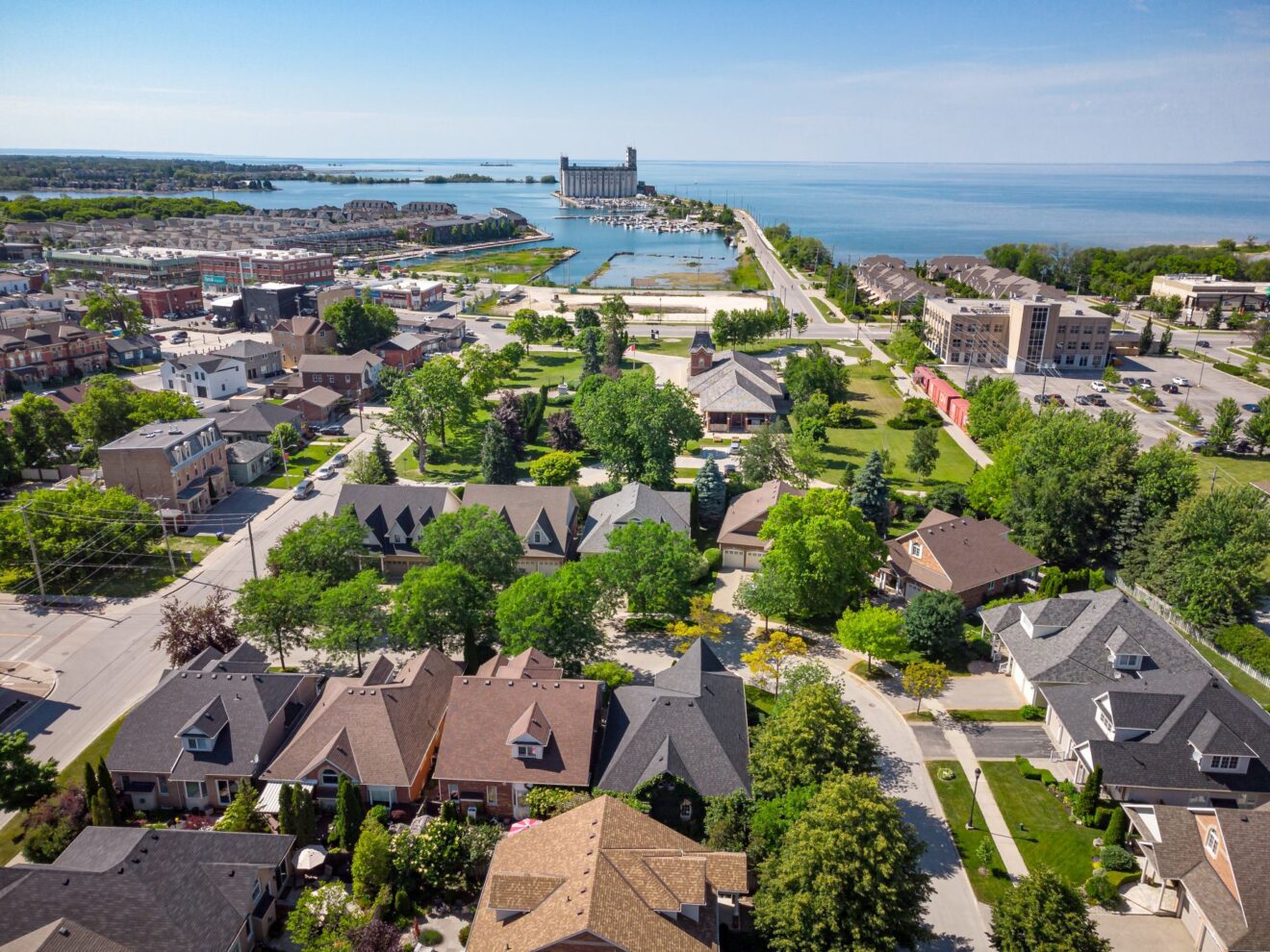
Collingwood sits on the southern shore of Georgian Bay in a four-season recreation area. Its waterfront setting and downtown are important parts of the community’s character. [2]
A full-time resident, a downsizer and someone buying a weekend property may value different features. Think about the trips you will make most often, your parking and storage needs, accessibility, and the maintenance you are willing to manage.
For a downtown-area home, visit the surrounding streets at different times and assess the actual walk to the services you use. For a waterfront-area property or condominium, investigate access arrangements and ownership obligations rather than assuming that a view includes private waterfront rights.
If your search extends toward Blue Mountain or Thornbury, confirm the municipality and use comparable sales from that market. Proximity does not make neighbouring communities interchangeable for pricing or property rules.
Make condominium due diligence part of the decision
When comparing Collingwood condos for sale, look beyond the purchase price and monthly fee.
Have your lawyer review the status certificate and relevant condominium documents. Ask about the corporation’s finances, reserve fund, planned work and any disclosed special assessments. Confirm the rules affecting pets, parking, rentals and alterations if those issues matter to you.
Two similarly priced units can create different long-term obligations. A fee that appears low is not, by itself, evidence of a better-managed or less expensive property.
Use evidence to negotiate
A buyer-oriented market can give you a reason to investigate opportunities, but an offer should still be supported by the facts.
Recent comparable sales, property condition and competing choices can help explain your price. A closing date that suits the seller may also matter, although it should fit your own financing and moving plans.
Discuss appropriate inspection, financing and condominium-document conditions with your agent and relevant professionals. Market conditions are not a reason to overlook risks that could materially affect your purchase.
Should you buy a home in Collingwood now or wait?
September’s report gives buyers reasons to be selective: sales slowed compared with a year earlier, the sales-to-new-listings ratio was low, and average and median prices moved in different directions. [1]
It does not establish what prices or mortgage rates will do next.
Buying may make sense when the property meets your needs, the ownership costs are comfortable and the price is supported by comparable sales. Waiting may be sensible if your financing is uncertain, your needs are likely to change or none of the available homes is a good fit.
Trying to identify the exact bottom of the Collingwood real estate market can distract from the decision you can control: whether a particular home represents suitable value for your circumstances.
Frequently asked questions about the Collingwood real estate market
What is the average home price in Collingwood?
Royal LePage Locations North reports an average sale price of $847,333 for September 2026 and a January-to-September average of $786,312. These are different reporting periods, and neither figure is a valuation of an individual home. [1]
What is the median home price in Collingwood?
The reported September 2026 median sale price was $605,000, down 11.03% year over year. The year-to-date median was $660,000, down 3.3%. [1]
How many homes are for sale in Collingwood?
The cited September report records 163 new listings, but it does not provide an active-listing total. For the number currently available, use a dated MLS inventory search and specify the property types and price range you want. [1]
Is it a good time to buy in Collingwood?
The September report describes buyer’s market conditions, which can support a more selective search. Whether buying is right for you depends on affordability, the property’s condition, comparable sales and how long you expect it to meet your needs. [1]
Can buyers offer below asking price?
You can discuss an offer below asking with your agent, but a market-wide label does not determine what a seller will accept. Use comparable sales, competing listings and the property’s condition to build a reasonable offer strategy.
Get a Collingwood market update tailored to your search
The town-wide numbers are a starting point. The next step is understanding what is happening among the homes you would actually consider buying.
If you are exploring homes for sale in Collingwood, get in touch to request a neighbourhood-specific market update. We can review recent comparable sales, current listings and the questions to investigate before you make an offer, so your decision is grounded in the property—not just the headlines.
Market figures are attributed to Royal LePage Locations North’s September 2026 Collingwood report, which notes possible discrepancies following a reporting-system transition. Information reflects the stated reporting periods and is not a guarantee of future prices or a substitute for property-specific, legal or mortgage advice.
Sources