
The Blue Mountains, Ontario | Reviewed October 26, 2026 | All amounts in Canadian dollars
Dreaming of your own place near Blue Mountain? You might picture ski weekends, summer outings or a comfortable base where you can arrive, unpack and enjoy a few days away. If you could rent it when you’re not using it, that might make the idea even more appealing.
Before you fall in love with a property, though, it’s worth understanding what you’re actually buying. A residential second home, an independently managed vacation rental and a resort condominium-hotel can come with very different costs and rules.
Buying a Blue Mountain vacation property starts with three questions: Can you use it the way you want? What will it cost to own? And what would rental income leave after expenses?
This guide walks you through those questions in plain language. You’ll learn which fees to look for, why rental permission needs to be checked property by property, and how to compare potential returns without confusing bookings with profit.
Start with the property—not just the Blue Mountain name
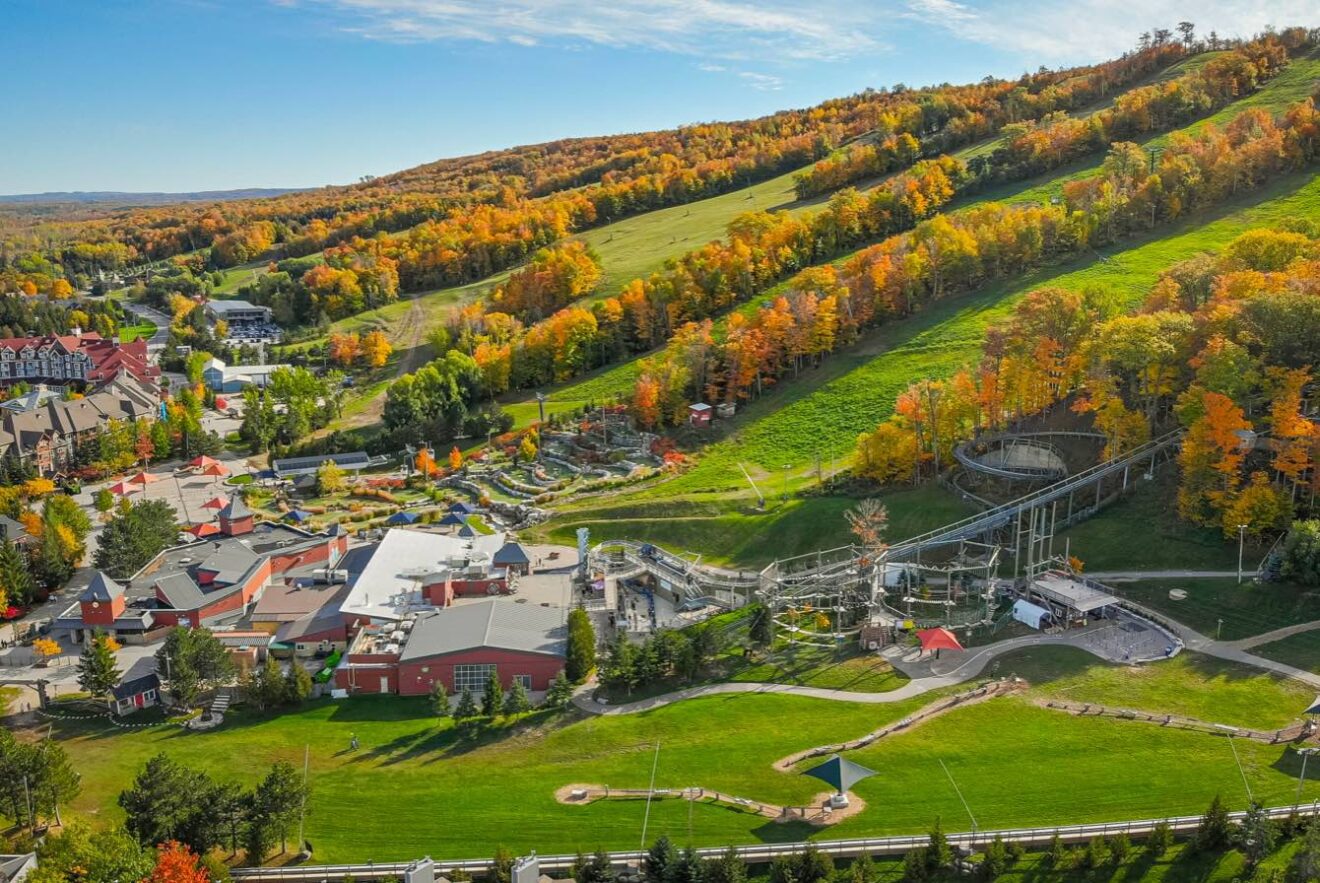
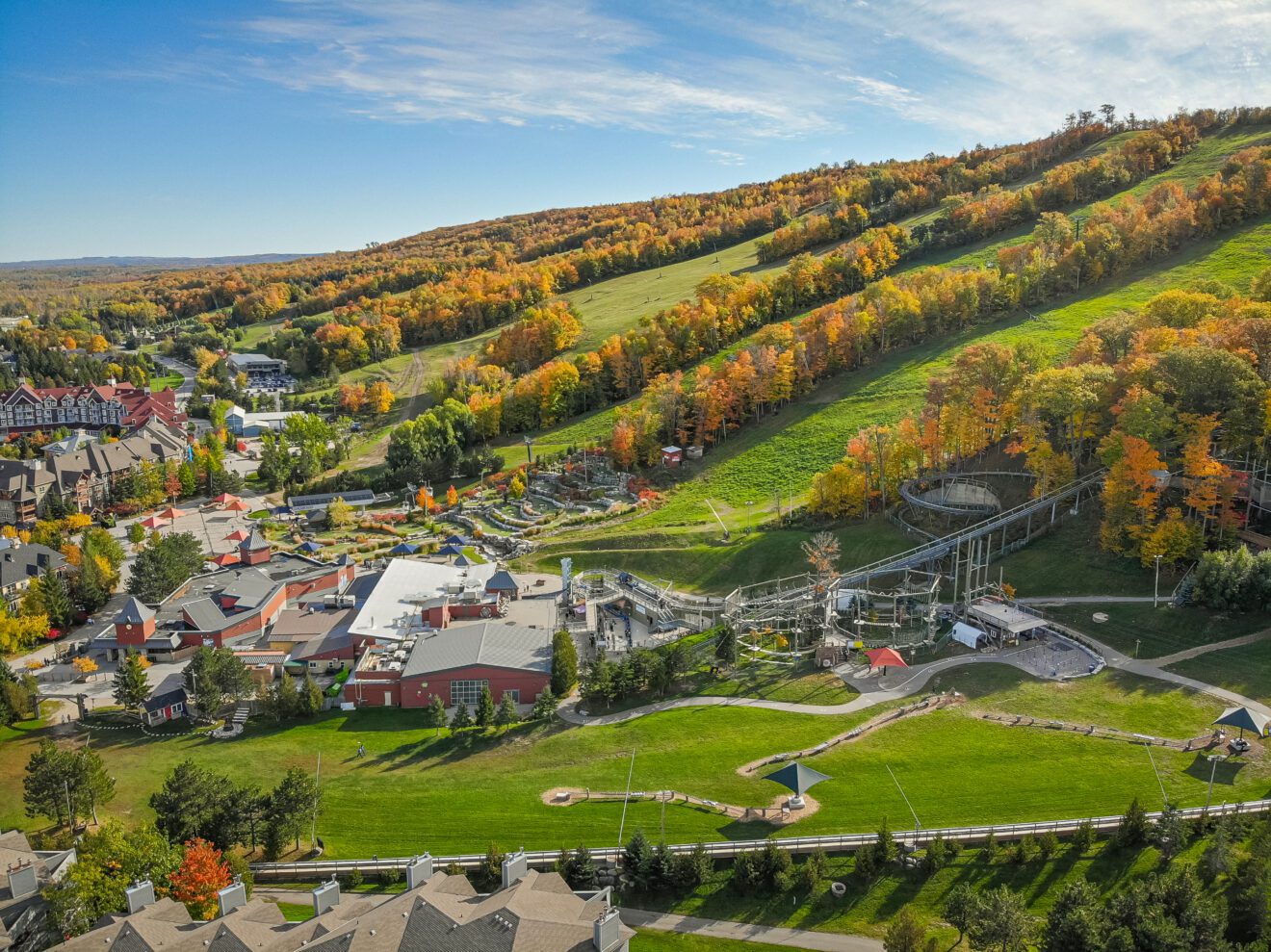
Blue Mountain Resort and Blue Mountain Village sit within the Town of The Blue Mountains in Grey County. The municipality also includes communities such as Thornbury, Clarksburg and Craigleith. Nearby Collingwood is a separate municipality. [1]
That matters when a listing is marketed as being “near Blue Mountain.” The phrase describes a location, not a set of rental rights. Confirm the actual municipality and address before applying rules or fees to the purchase.
Then decide what you want from the property. Is it mainly a personal getaway? Is rental income essential to your budget? Or would you like a mix of owner use and paid stays?
The answer will help you compare three different ownership experiences.
A personal second home
If your main goal is time away, focus on how the home would serve your visits. Think about bedrooms, parking, equipment storage and how much upkeep you’re comfortable arranging while you’re elsewhere.
You don’t need rental income to justify every vacation-property purchase. But if you might rent later, check that possibility now rather than assume proximity to the resort makes it permissible.
An independently managed vacation rental
This may suit you if you want more control over bookings and operations. It also means understanding the property’s municipal permissions, any condominium restrictions and who will look after guests and the home.
Hiring a manager can reduce your workload, but it doesn’t remove the need to review the agreement. Find out what the manager does, what they charge and which expenses stay with you.
A condominium-hotel or resort rental arrangement
A resort-managed unit can offer a different experience from running your own vacation rental. The operator agreement and condominium documents may govern rental channels, furnishings, refurbishment and owner bookings.
For a concrete example, Blue Mountain’s public Mosaic at Blue refurbishment guidance states that its declaration restricts owners from renting through another channel and that units must meet the rental manager’s hotel standards. [2]
Those are Mosaic-specific details, not a promise that every building has the same terms. Ask for the actual documents governing the unit you want, including owner-use conditions and how rental proceeds reach you.
Also confirm the ownership interest itself. A full-title purchase, a fractional interest or any lease-based arrangement should be evaluated on its own rights and obligations—not compared simply by advertised price.
What does a Blue Mountain vacation property cost to buy?
Financing and upfront cash
Your down payment is only one part of the cash you’ll need. Allow for closing expenses, any applicable association entry fee, furnishings and the work required to get the property ready for your intended use.
Be clear with your lender about both personal use and rental plans. A vacation property or condominium-hotel shouldn’t be budgeted using a generic minimum-down-payment headline. Ask for property-specific terms, including whether anticipated rental income will count toward qualification. [3]
Land transfer tax and closing expenses
For an ordinary $700,000 purchase, Ontario’s published rates produce $10,475 in provincial land transfer tax before any eligible refund. [4]
Don’t automatically subtract a first-time-homebuyer refund from a vacation-property budget. Eligibility includes principal-residence occupancy requirements, along with other conditions, so the refund isn’t available merely because this is your first purchase. [5]
Your lawyer can estimate legal fees, registration and title-related expenses, adjustments and any transaction-specific charges. Your lender can explain appraisal or financing costs. Plan separately for an inspection and for moving or setup expenses relevant to the home.
GST/HST can change the purchase calculation
This is an important question to raise before making an offer on a short-term-rented or condominium-hotel property.
Don’t assume that every resale vacation condo has the same GST/HST treatment as an ordinary previously occupied residential home. CRA guidance explains that a previously occupied property used as short-term accommodation can be taxable when sold. The actual treatment depends on the facts. [6]
Have your lawyer and accountant review the property’s use history, the agreement’s tax wording and your plans. If tax is payable, its cash requirements and any possible recovery need their own analysis. A casual “it’s a resale, so there’s no HST” assumption could materially change your budget.
Blue Mountain Village Association fees: three separate items to check
For a Blue Mountain Village Association member property, you’ll want to understand purchase, annual and rental-related charges. BMVA membership doesn’t automatically apply to every property in the Town of The Blue Mountains. Its buying-and-selling guidance directs buyers and their lawyers to the property’s membership information and applicable fees. [7]
The figures below come from BMVA’s January 2026 Realtor Quick Reference Guide, reviewed for this article. The guide is for reference and directs readers to confirm information with BMVA. Obtain current confirmation and the property’s status-certificate information before budgeting a transaction. [8]
The entry fee when you buy
The published guide gives an entry fee of 2% of the purchase price for Village Core member properties and 0.5% for member properties outside the Village Core, plus HST. [8]
For example, at a $700,000 purchase price, the published Village Core calculation would be $14,000 plus HST, if that fee applies to the property you’re buying.
That is separate from Ontario land transfer tax. Knowing both amounts early helps you avoid understating the cash needed to close.
The annual Basic Fee
The January 2026 guide gives annual Basic Fee rates of $1.16 plus HST per above-grade square foot inside the Village Core and $0.29 plus HST per above-grade square foot outside it. It says rates are set through the annual budget process. [8]
This is not a percentage of the property’s assessed value. As an illustration, 1,000 above-grade square feet at the guide’s Village Core rate would calculate to $1,160 plus HST annually, subject to current confirmation and the property’s applicable measurement.
BMVA’s buying-and-selling guidance describes quarterly installments. [7] Ask which charges are billed directly to you and whether any are already accounted for in an operator’s statement.
The rental-related Village Amenity Fee
The same guide states a 2% plus HST Village Amenity Fee, also called a Rental Royalty, on gross rental revenue from both long- and short-term rentals of member properties. [8]
It is a different charge from municipal accommodation tax, and BMVA membership doesn’t itself give you permission to rent. Confirm who calculates and remits it and how it appears in your accounts.
The ongoing ownership costs beyond the purchase price
Condo fees, maintenance and replacement needs
If you’re buying a condominium, compare the actual common-expense fee and inclusions. Condo fees fund shared expenses and corporation reserve contributions. Don’t add the same reserve contribution a second time to your budget. [9]
You may still need your own allowance for appliances, furnishings and repairs you’re responsible for. In a rental program, required upgrades or refurbishment can also affect your ability to participate, as the Mosaic example illustrates. [2]
An attractive interior today doesn’t tell you what replacement work might be required next year. Ask about upcoming projects and the relevant documents.
Taxes, utilities and insurance
Confirm the actual property-tax bill, not just an old listing figure. Check which utilities are included in shared fees and which are billed separately.
Get insurance based on the way you will use the property. Tell the insurer about paid guests, vacancies and any manager. Ask how your coverage works with the corporation’s insurance and any applicable licensing requirements.
A weekend property still has costs while you’re away. Heating, utilities, insurance and maintenance arrangements need to stay in the budget even during quieter booking periods.
Rental operations and management
Look beyond the advertised management percentage. Ask what it covers: booking administration, guest support, cleaning, supplies, linen, platform commissions or something more limited.
A cleaning charge collected from a guest isn’t automatically extra profit. Trace what you collect against what you pay. Similarly, make sure a fee deducted by the operator isn’t added again elsewhere in your budget.
You’ll also want room for occasional costs such as an insurance deductible, assessment or repair outside your normal allowance. A useful budget is complete enough to show what you would personally need to contribute.
Can you legally rent the property short term?
Start with address-specific zoning and classification
The Town of The Blue Mountains treats rentals of less than 30 consecutive days within its short-term-accommodation framework. Its process directs buyers and applicants to check zoning eligibility and obtain the relevant planning clearance. [10]
But a residential short-term rental and a Commercial Resort Unit, or CRU, aren’t interchangeable classifications. The Town’s zoning materials distinguish CRUs and centralized rental programs. [11]
For a resort condo or condominium-hotel, ask the Town to confirm the address’s classification, permitted use and required process in writing. Don’t automatically apply the ordinary residential licence route to every resort unit—or assume the resort location exempts it from all requirements.
A seller’s licence does not simply transfer to you
The Town’s licensing by-law states that licences are not transferable. A seller’s existing operation therefore isn’t an automatic right for you to continue renting under the same licence. [12]
Ask what a change of ownership means for the particular property, including the purchaser’s application or approval path. This is especially important when rental income is essential to your financing or ownership budget.
Check the current licence category and restrictions
As reviewed October 26, 2026, the Town publishes two-year licence fees of $2,500 for Type A and Type B, and $2,560 for Type C. Other application, eligibility and inspection charges can apply, and the Town reviews fees annually. [10]
The same page states that new Type B licences outside the exception zone are under a moratorium, while existing licences may renew. Combined with the non-transferability rule, this is a reason to obtain written buyer-specific guidance—not rely on a listing saying the home is currently rented. [10]
Eligibility, inspections and licence conditions matter as well as the fee. For an applicable licensed rental, approved occupancy and parking may limit how the home can operate. The licensing by-law also requires a responsible person who is available around the clock and can attend within 30 minutes when notified by the Town or an authorized officer. [12]
If you live elsewhere, confirm how that responsibility will be fulfilled and what it will cost.
Condominium and rental-program rules are another layer
Municipal permission doesn’t override a condominium declaration or operator agreement. And an operator’s willingness to manage a unit doesn’t replace a municipal determination.
Ask separately about guest restrictions, owner booking procedures, approved rental channels, furnishings and required upgrades. Your lawyer should review the documents rather than infer the rules from another building nearby.
Municipal accommodation tax and GST/HST are not the same charge
The Town’s Municipal Accommodation Tax is 4% on applicable stays under 30 days and has been in effect since January 6, 2025. Its guidance expressly includes short-term rentals and Commercial Resort Units. [13]
MAT is a guest charge to be collected and remitted, not money you should count as your own rental profit. If a unit is managed through a rental company or program such as Blue Mountain Resort, the Town says the managing entity handles the reporting and remittance. That doesn’t make the accommodation tax disappear. [13]
GST/HST is separate. CRA uses its own definition for short-term accommodation, generally continuous occupancy of less than one month, and registration and collection requirements depend on the circumstances. The commonly mentioned $30,000 threshold isn’t a blanket exemption for buying or selling a vacation property. [6]
Ask your accountant who must register, which charges apply and how your manager or booking platform handles them. Don’t assume one “under 30 days” rule answers every municipal and tax question.
How to evaluate potential rental returns
The number you see in a booking projection is usually the beginning of the calculation, not the end.
Gross accommodation revenue is the money earned from paid stays before expenses. Operating surplus is what remains after the rental’s operating costs. Cash flow after financing then subtracts the money required for mortgage payments and any other cash commitments.
Those figures answer different questions. A property can have an operating surplus while still requiring you to contribute cash because of its mortgage.
Before relying on projected income, request property-specific statements covering complete seasons, ideally more than one year. Look for paid nights, average achieved rates, owner-use blocks, refunds and deductions. Ask whether a figure is actual accommodation revenue, an operator payout or a forecast.
Then apply your own plans. The weekends you’d most enjoy may also be dates you could otherwise rent. Block those nights before estimating income, and don’t use the highest holiday rate as the average for every stay.
A simple illustrative rental calculation
This is a hypothetical teaching example—not a Blue Mountain market average, a property forecast or a rental-program quote. Every revenue, cost and financing input below is assumed. No particular building or operator is being modelled.
Imagine a $700,000 vacation condo that is legally permitted to operate under the assumed rental arrangement. Suppose it achieves 180 paid nights at an average accommodation rate of $350, excluding guest taxes and separately reimbursed cleaning.
That produces $63,000 in gross accommodation revenue.
Now assume combined variable rental costs equal 30% of that revenue, or $18,900. This illustrative allowance includes management, booking and any revenue-based charges, plus net unreimbursed turnover costs. It isn’t a real manager’s quoted commission. An actual applicable BMVA rental assessment must be included once, not overlooked or double-counted.
Assume these fixed annual operating costs:
- Condo fees: $8,400.
- Property taxes: $3,600.
- Owner insurance: $1,800.
- Separately billed utilities and internet: $3,600.
- Licensing and association allowance: $1,800.
- Routine repairs and supplies: $1,800.
Those assumed fixed costs total $21,000. They are teaching inputs, not confirmed fees for a real property, and only apply to items not already covered elsewhere.
After the variable and fixed costs, the illustrative operating surplus is $23,100 before financing, income tax and additional replacement savings.
Divide that surplus by the $700,000 purchase price and you get an illustrative operating yield of 3.3%. It is not a local return benchmark or your total investment return: the denominator excludes closing and setup costs, and the calculation excludes financing, income tax, appreciation and resale expenses.
If you set aside a further $2,400 for future owner-paid replacements, you’d have $20,700 available before financing and income tax. This is your personal cash allocation, not another contribution to the condo corporation’s reserve fund.
Now include a mortgage
For an additional illustration, assume a $210,000 down payment and $490,000 mortgage, with a 5% fixed annual rate, compounded semi-annually, not in advance, and a 25-year amortization with monthly payments.
The calculated payment is approximately $2,849.86 per month, or $34,198.32 annually using the rounded monthly amount. This is not a current lender offer or a guarantee the property qualifies for that financing.
Subtract those payments from the $20,700 available after replacement savings, and the example requires an owner contribution of approximately $13,498.32 per year before income tax.
That’s the difference between a booking headline and your own cash-flow experience. Full mortgage payments matter to cash flow, although the principal portion repays your loan rather than being entirely an economic expense.
What if bookings are lower?
Keep the same assumptions, but reduce paid nights from 180 to 140. Gross accommodation revenue falls to $49,000. After the assumed variable costs, fixed costs and replacement savings, $10,900 remains before financing and income tax.
With the same mortgage payments, the annual owner contribution rises to approximately $23,298.32.
The point isn’t to predict a loss or a profit for your property. It’s to test whether you could comfortably own it if bookings, achieved rates or expenses don’t match the initial projection.
This example also excludes the cash required for purchase, closing, setup, any acquisition GST/HST, major assessments and extraordinary claims. Replace its inputs with the real property’s records and quotes before using it to make a decision.
Keep rental returns, tax outcomes and personal enjoyment separate
If you’ll use the home yourself as well as rent it, your accounting needs to reflect that mix. CRA requires rental income to be reported and shared expenses to be allocated appropriately between personal and income-producing use. Mortgage principal isn’t deductible as a rental expense; eligible interest is a different calculation. [14]
There can also be tax consequences for non-compliant short-term rentals. CRA’s rules for income earned after 2023 can deny expense deductions for relevant non-compliant periods, including failures to meet applicable operating or licensing requirements. Compliance isn’t only a local enforcement question. [14]
An accountant can explain what these rules mean for your actual property and use. Don’t treat the sample cash-flow calculation as an after-tax result.
Finally, be honest about the personal value. A property may be worthwhile to you because your family will use and enjoy it, even if rental income only offsets part of the cost. That’s a lifestyle decision, not the same thing as a positive investment return.
Likewise, future appreciation isn’t guaranteed. When planning a sale, consider selling expenses, any tax consequences and the rules that could affect the next buyer.
What to request before making an offer
Your agent, lawyer, lender, accountant and prospective manager can help you gather the right information. A useful starting package includes:
- Written municipal confirmation of zoning, permitted use and the buyer’s licensing or resort-unit process.
- The condominium status certificate and governing documents, where applicable.
- The actual rental-management agreement, owner-use rules and refurbishment notices.
- Current BMVA confirmation of membership and applicable fees, if relevant.
- Unit-specific rental statements, booking history and complete expense records.
- Property-tax information, utility costs and insurance and financing quotes.
A resale condominium status certificate provides financial and governing information that should be reviewed with legal counsel. [16] It doesn’t replace the operator agreement, municipal checks or the property’s tax review.
If you’re planning alterations, also ask the municipality about the applicable building and planning approvals before buying on the assumption that changes are possible.
Frequently asked questions about Blue Mountain vacation properties
Can every property near Blue Mountain be rented on Airbnb or another platform?
No. The exact municipal address, zoning, required approvals and condominium or operator documents determine what’s permitted. A resort location isn’t rental permission, and some program documents restrict rental channels. [2] [11]
Does the seller’s short-term-rental licence transfer when I buy?
The Town’s licensing by-law says licences aren’t transferable. Confirm the purchaser’s process and eligibility in writing, especially where current category restrictions may affect a new application. [10]
Does every Blue Mountains property pay BMVA fees?
No. Check whether the actual property is a BMVA member property. If it is, confirm entry, annual and rental-related obligations rather than assume the same fees apply municipality-wide. [7]
Can rental income cover all my costs?
Possibly for some circumstances, but you shouldn’t assume it will. Compare actual revenue and expenses, include financing and replacement needs, and test a lower-booking scenario. Gross revenue isn’t the owner’s net return.
Can I use a resort-managed condo whenever I want?
Review the specific owner’s agreement and booking rules. Don’t assume all resort buildings have identical owner-use terms or that buying the unit gives unrestricted control over the rental calendar.
Should I ask about HST on a resale vacation condo?
Yes, particularly where a property has been used for short-term accommodation. Have your lawyer and accountant review the facts and contract wording before relying on a general resale-home assumption. [6]
Ready to find a vacation property that fits your plans?
Start with the experience you want: a personal getaway, a rental operation or a balance of both. Then look for a property whose documented permissions, ownership obligations and budget support that plan.
Get in touch for a personalised vacation-property shortlist. We can help you compare Blue Mountain vacation properties for sale, gather the property information and identify the questions to review with your advisers before making an offer.
For a wider location comparison, our guide to living in Southern Georgian Bay explains how the surrounding municipalities differ. Our guide to the cost to own a condo in Collingwood also covers general ownership-budget considerations, although rental permissions must be checked separately in the municipality where you buy.
This guide provides general educational information, not individual legal, tax, financing or investment advice. Rules and fee schedules can change. Confirm current requirements and costs for the specific property; sample returns are hypothetical and aren’t a promise of rental performance or future value.
Sources
- Town of The Blue Mountains — Community Profile and Municipal Geography
- Blue Mountain Resort — Mosaic at Blue Refurbishment and Rental Restrictions
- Financial Consumer Agency of Canada — Mortgage Qualifier Tool
- Ontario — Calculating Land Transfer Tax
- Ontario — Land Transfer Tax Refunds for First-Time Homebuyers
- Canada Revenue Agency — Residential Real Property Sales and GST/HST
- Blue Mountain Village Association — Buying and Selling
- Blue Mountain Village Association — Realtor Quick Reference Guide January 2026
- Condominium Authority of Ontario — Common Expenses Fees
- Town of The Blue Mountains — Short Term Accommodation Licensing
- Town of The Blue Mountains — Short-Term Accommodation Zoning Amendment
- Town of The Blue Mountains — Short Term Accommodation Licensing By-law 2021-70
- Town of The Blue Mountains — Municipal Accommodation Tax
- Canada Revenue Agency — Sharing Economy and Accommodation Income
- Canada Revenue Agency — Rental Income Guide
- Condominium Authority of Ontario — Status Certificates